Invisalign has become one of the most talked-about ways to straighten teeth, but a lot of what circulates online is either oversimplified or outdated. This guide goes beyond the basics, covering how the technology actually works, how it compares to traditional braces, what day-to-day life with aligners is really like, and some of the most common myths worth clearing up.
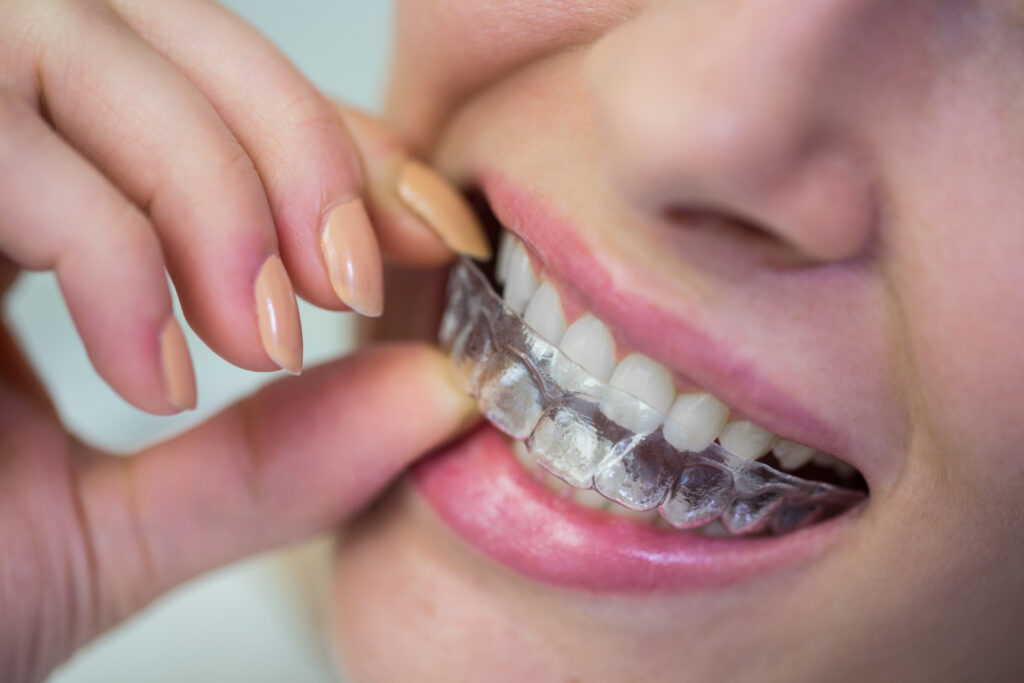
Clear aligner treatment relies on digital orthodontics, a combination of 3D scanning, computer modelling, and precision manufacturing. Rather than a dentist manually bending wires as treatment progresses, the entire movement pathway for every tooth is mapped out in advance using specialised software.
Each aligner in the series is manufactured to apply gentle, controlled force to specific teeth at specific stages. The material itself is a flexible, medical-grade thermoplastic engineered to hold its shape under constant use while still being comfortable against soft tissue. This is different from the acrylic or rigid plastic used in some retainers — aligner material is designed to flex slightly with the natural movement of the jaw while still exerting steady pressure on the teeth.
Because the full treatment plan exists digitally before a single aligner is made, the sequence of tooth movement is largely locked in from day one, which is part of why aligner treatment tends to be more predictable than older orthodontic approaches that relied on periodic manual adjustments.
The two approaches move teeth using fundamentally different mechanics, and each has genuine trade-offs, it’s not simply that one is “better.”
Force application: Braces use continuous force through wires and brackets, which can be adjusted at each visit. Aligners apply force in discrete stages, with each new aligner nudging teeth slightly further than the last.
Treatment visibility: Aligners are the clear advantage here, they’re far less noticeable, which matters for anyone in a client-facing job or self-conscious about visible metalwork.
Discipline required: Braces are fixed and require no patient compliance beyond attendance. Aligners are removable, which is convenient but it also means results depend on wearing them consistently. Treatment can stall out entirely if aligners are frequently left out.
Handling complex cases: Severe rotations, significant bite corrections, or certain tooth-shape irregularities can sometimes be managed more precisely with fixed braces, though modern aligners with attachments have closed much of that gap in recent years.
Day-to-day comfort: Braces can cause more irritation to cheeks and lips, particularly after adjustments. Aligners are generally smoother against soft tissue but can cause temporary pressure discomfort each time you switch to a new set.
Neither option is universally superior, the right choice depends on the specific alignment issue and how much day-to-day flexibility a patient needs.
One of the more practical (and less discussed) aspects of aligner treatment is how it fits into everyday routines.
Eating out: Aligners come out before any meal, so there are no food restrictions, but they need to go back in shortly after, which means factoring in a quick clean of both teeth and aligners after eating, even away from home.
Travel: Because each aligner is worn for roughly one to two weeks, longer trips mean packing enough sets to last the journey, plus a case to store them safely when they’re out. Extreme heat (like leaving aligners in a hot car) can warp the plastic, so they need to be treated a bit like sunglasses, always in the case, never loose in a pocket or bag.
Speech: Most people adjust to speaking with aligners in within a few days. A slight lisp is common initially but typically resolves as the tongue adapts to the extra surface against the teeth.
Sleep: Aligners are worn overnight as part of the recommended 20–22 hours a day, so there’s no need to remove them before bed (in fact, doing so regularly will slow progress).
Exercise and sport: Aligners can generally stay in during most exercise. For contact sports, a mouthguard may be worn over the aligners, or removed briefly with a case on hand, worth discussing directly with your provider if you play a contact sport regularly.
“Invisalign is only for minor cosmetic issues.”
While aligners were originally associated with mild crowding or spacing, modern systems with attachments and refined software can now address a much broader range of cases, including some bite corrections that once required fixed braces.
“You can’t drink anything with aligners in.”
Water is fine with aligners in. It’s specifically other beverages — anything with sugar, acidity, or staining potential like coffee, tea, or soft drinks — that should be avoided while wearing them, since liquid gets trapped between the aligner and the tooth surface.
“Aligners work the same for everyone.”
Treatment speed and outcomes vary significantly based on the complexity of the case, age, and how consistently the aligners are worn. Generic before-and-after timelines seen online don’t necessarily reflect what an individual case will look like.
“Once treatment ends, you’re done.”
Nearly all orthodontic movement — aligners or braces — requires long-term retainer wear afterward. Teeth have a natural tendency to drift back toward their original position, so skipping retainers is one of the most common reasons results don’t last.
Good aligner hygiene affects both oral health and how well the aligners continue to fit as treatment progresses.
Rinse aligners every time they’re removed, rather than letting saliva and food particles dry on them.
• Clean them daily with a soft toothbrush and lukewarm water — hot water can distort the plastic.
• Avoid coloured or heavily scented soaps, which can leave residue or affect taste.
• Store aligners in their case whenever they’re out, rather than in a napkin or loose in a bag, where they’re easily lost or damaged.
• Replace a cracked or excessively worn aligner promptly, since a poor-fitting aligner won’t apply the intended pressure.
If you’re noticing ongoing fit issues or discomfort that doesn’t settle within a couple of days, it’s worth booking a check-up rather than waiting for your next scheduled visit.
Some patients notice slightly more pressure with certain aligners in the series, particularly ones involving larger movements, but it’s generally mild and temporary — usually easing within a day or two as the mouth adjusts.
Mild, temporary sensitivity to pressure is common, especially in the days after switching aligners. This is different from sensitivity to temperature (hot or cold), which is less commonly linked to aligner wear and worth mentioning to your dentist if it persists.
Well-fitted aligners shouldn’t irritate healthy gums, though anyone with pre-existing gum sensitivity should have that assessed before starting treatment, since consistent aligner wear does require thorough daily cleaning around the gumline.
The aligner material itself can pick up slight discolouration over its one-to-two week wear cycle, particularly from pigmented foods or drinks that touch it, which is part of why each aligner in the series is used only briefly before being replaced.
Chewing gum will stick to the aligner material and is best avoided while wearing them — gum should be removed along with the aligners beforehand, similar to eating.
If you’re exploring Invisalign, it can help to understand the full range of cosmetic and restorative options available.
You can explore:
Veneers | Invisalign | Implants
EEvery treatment plan is customised to your specific goals: a consultation allows us to evaluate your smile in detail and guide you toward the most suitable option.
Whether you are considering teeth whitening, alignment options, or restorative treatments, our team at Dental Galleria provides professional dental care tailored to your needs. We focus on supporting your oral health and helping you maintain a functional and comfortable smile.
Book your appointment today to discuss the treatment options suitable for you.
We are located at, 4/90
Charles St, Putney NSW 2112
© 2025 Dental Galleria. All rights reserved.
Website By 360 Dental marketing


