A dental emergency rarely happens at a convenient time. A sudden toothache, a knocked-out tooth during sport, or a crack that appears out of nowhere can all be stressful and confusing in the moment. Knowing how to respond in the first few minutes can genuinely affect the outcome, sometimes even determining whether a tooth can be saved. This guide covers how to recognise a true emergency, what to do for common scenarios, and what to avoid.
If you’re already dealing with a dental emergency right now, you can read emergency dentistry for information on same-day appointments.
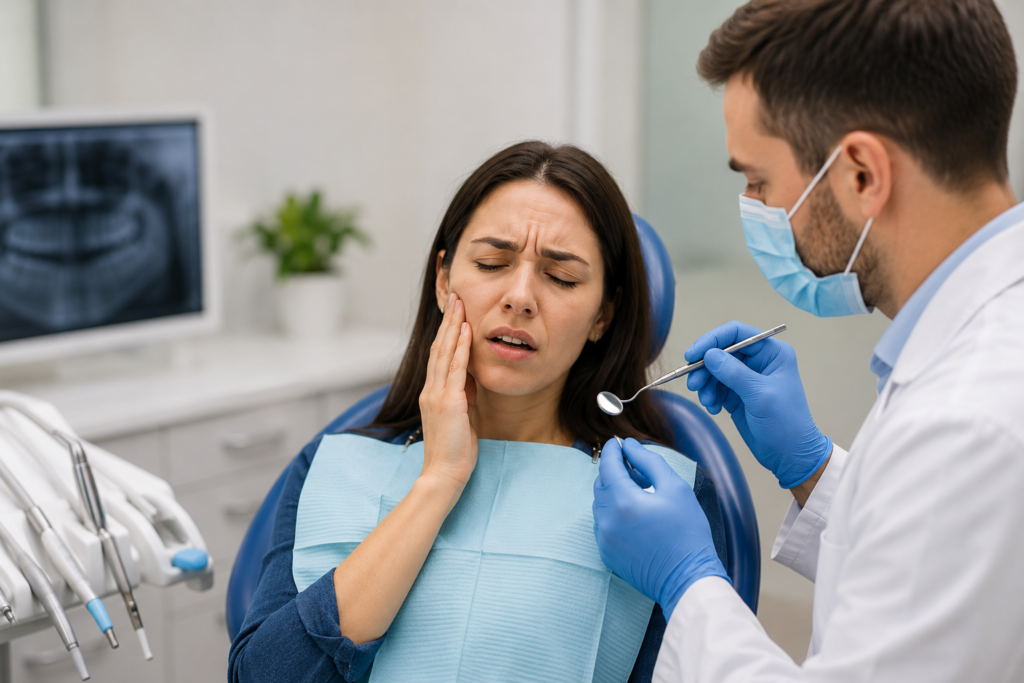
Not every dental problem needs same-day attention, but some genuinely can’t wait. A few signals that something needs urgent care rather than a routine appointment:
• Severe, persistent pain that isn’t easing with over-the-counter pain relief
• A tooth that has been knocked out or is visibly loose after an injury
• Noticeable facial swelling, particularly if it’s spreading or affecting your ability to swallow or breathe
• Uncontrolled bleeding from the mouth that doesn’t stop with firm pressure
• A cracked, chipped, or broken tooth with visible pulp (the pink or reddish inner layer) exposed
On the other hand, a minor chip with no pain, a lost filling with no sensitivity, or a small ulcer can usually wait for a regular appointment, though it’s still worth having them checked reasonably soon.
Pick the tooth up by the crown, the chewing surface, never the root. If it’s dirty, rinse it briefly in milk or saline, not tap water, which can damage the root surface cells. If possible, try gently placing it back in its socket and biting down softly on a clean cloth to hold it in place. If that’s not possible, store it in a small container of milk (or saliva, if milk isn’t available) and seek care immediately. The chances of successfully saving the tooth drop significantly after about 30 to 60 minutes outside the mouth.
Rinse your mouth gently with warm water. Save any broken fragment if you can find it, and apply a cold compress to the outside of the cheek to reduce swelling. Avoid chewing on that side of the mouth until it’s assessed, even if the crack looks minor, since small cracks can extend deeper than they appear.
If a crown has come off intact, keep it and try not to swallow or lose it, since it can sometimes be re-cemented. Avoid chewing on that tooth, as the exposed surface underneath is often more sensitive. Dental temporary filling material from a pharmacy can offer short-term relief, but shouldn’t replace proper treatment.
An abscess is a pocket of infection and is one of the more serious dental emergencies, since infection can spread beyond the tooth if untreated. Rinse gently with warm salt water and apply a cold compress externally, but keep in mind this only manages discomfort. It doesn’t treat the underlying infection, which needs professional care as soon as possible.
For a poking wire, a small piece of orthodontic wax (or even a rolled bit of sugar-free gum in a pinch) over the sharp end can prevent irritation until it’s seen. Never attempt to cut a wire yourself, as small pieces can be a swallowing or choking risk.
Rinse the area gently and apply firm, steady pressure with a clean cloth or gauze to control bleeding. If bleeding doesn’t slow within about 15 minutes of continuous pressure, this warrants urgent care rather than waiting.
A few common instincts can actually make things worse:
• Don’t place aspirin directly against a sore tooth or gum. Despite an old myth, this doesn’t relieve pain and can burn the gum tissue.
• Don’t ignore a knocked-out tooth for hours before seeking help. Timing matters more than almost any other factor in whether it can be saved.
• Don’t try to “wait out” a suspected abscess with pain relief alone. Swelling and infection can progress quickly, and in rare cases spread beyond the mouth.
• Don’t attempt to re-glue a crown or filling with household adhesives. These aren’t safe for use in the mouth and can complicate proper treatment later.
Dental pain has a frustrating habit of coming and going, which can make it tempting to assume a problem has resolved on its own. In most cases, the underlying issue is still progressing even when discomfort temporarily eases. Delaying treatment often means a simpler problem, such as a small crack or an early infection, has time to develop into something requiring more extensive treatment. The longer it’s left unaddressed, the more the surrounding tissue and bone tend to be affected.
A few inexpensive items kept on hand can make a real difference in the first moments of a dental emergency:
• A small container with a lid (for transporting a knocked-out tooth in milk)
• Sterile gauze or clean cloth
• Orthodontic wax (useful for braces, but also handy for covering a sharp broken edge temporarily)
• Over-the-counter pain relief suitable for you (checking any personal medical restrictions first)
• A cold pack, or something that can be improvised from the freezer
• Your dentist’s contact details saved somewhere easy to find in a hurry, rather than relying on searching for them mid-emergency
Severe pain, visible swelling, uncontrolled bleeding, or any injury involving a knocked-out or badly displaced tooth all warrant same-day attention. Milder issues without pain or swelling can typically wait a few days for a standard appointment.
Pain can ease temporarily, particularly if a nerve becomes less sensitive over time, but this doesn’t mean the underlying problem has resolved. Decay, infection, or a crack often continues progressing quietly even when it feels better.
Handle it by the crown only, avoid touching the root, and try to keep it moist, either back in the socket if possible, or stored in milk. Time is critical, so seek care as quickly as you can.
Yes. An untreated dental infection can spread to surrounding tissue and, in more serious cases, beyond the mouth entirely. Swelling, fever, or a foul taste alongside tooth pain are signs that shouldn’t be left untreated.
For issues confined to the teeth and gums, such as pain, a knocked-out tooth, or a dental abscess, a dentist is generally the right first call. Hospital emergency departments are more appropriate for facial trauma involving the jaw, uncontrolled bleeding that won’t stop, or breathing and swallowing difficulties.
If you are exploring related cosmetic treatment in Putney, it can also be helpful to understand the full range of cosmetic and restorative treatments available.
You can explore:
Veneers | Invisalign | Implants
If a tooth has been lost and can’t be saved, dental implants are one of the options worth discussing with your dentist as part of your recovery plan.
If you’re dealing with a dental emergency right now, contact us immediately for guidance.
Whether you are considering teeth whitening, alignment options, or restorative treatments, our team at Dental Galleria provides professional dental care tailored to your needs. We focus on supporting your oral health and helping you maintain a functional and comfortable smile.
Book your appointment today to discuss the treatment options suitable for you.
We are located at, 4/90
Charles St, Putney NSW 2112
© 2025 Dental Galleria. All rights reserved.
Website By 360 Dental marketing


